A post by
Thomas Birus
Dipl.-Ing. Food Technology
drinktec 2025, as a key indicator of industry trends, highlighted, among other things, the high projected growth rates in the Lifestyle & Health market segment. This article examines two aspects of this market segment. The first part focuses on the health benefits of fermented beverages, which increase the bioavailability of phytochemicals. The second part of the article uses the fermented beverage kombucha as an example and discusses the specifics of its production.
Released on 29/07/2026
A post by
Thomas Birus
Dipl.-Ing. Food Technology
Let’s start by hearing from Prof. Dr. Habil. Dr. Ing. Iryna Smetanska of Weihenstephan-Triesdorf University of Applied Sciences. She has long been studying the unique properties of phytochemicals.
Smetanska: In this market segment, I see a clear trend toward natural, minimally processed products with health benefits—for example, those that improve digestion, strengthen the immune system, or promote “healthy aging.”
Fermented beverages with probiotic and prebiotic effects—such as kombucha and plant-based yogurt alternatives, often combined with fruit-based ingredients—are experiencing particularly dynamic growth. At the same time, “new” ingredients like oats and legumes are becoming increasingly important, often combined with regional or exotic fruits that are rich in phytochemicals, vitamins, and minerals.
Smetanska: Although phytochemicals are not essential nutrients, they influence a wide range of key metabolic processes. Many of them have antioxidant effects, can lower blood pressure and cholesterol, and possess antimicrobial properties. They also interact with the gut microbiome by inhibiting or promoting the growth of certain microorganisms, thereby indirectly helping to regulate inflammatory and immune processes. The health effects attributed to them are generally the result of complex interactions (not just of a single molecule, but of the entire food!). That’s why I always consider SPMs in the context of the entire food matrix.
Smetanska: During fermentation, SPSs can react in very different ways. Some remain largely unchanged, others are transformed, and still others are only formed during the course of the process. Many SPS are initially bound in the raw product, for example, to cell walls or within the cell wall matrix. During fermentation, they are released, chemically modified, or degraded by plant or microbial enzymes. Microorganisms can also synthesize new bioactive compounds such as organic acids or metabolites of polyphenols. Our studies on phenolic acids show that the profile of individual phenolic acids changes over the course of fermentation for several of the reasons mentioned. These changes are also reflected in the sensory properties of the fermented food, such as taste, color, and mouthfeel.
Smetanska: For many SPS, there is evidence that fermentation can increase their bioavailability. Microorganisms break down the plant cell wall structure and cleave bound SPS, resulting in smaller, more soluble, and thus more easily absorbed compounds. At the same time, the pH value changes, and new metabolic products are formed that can positively influence the stability and solubility of other plant compounds. In fermented foods, antinutritional compounds such as phytates or certain alkaloids are also partially broken down, which improves the absorption of other nutrients and micronutrients. Overall, fermentation can thus help increase the “utilization” of selected SPS in metabolism, even though the effects depend heavily on the specific substance and the food matrix.
Smetanska: Many plant-derived substances can be isolated, purified, and used as concentrated components in food formulations. Technologically, this is achieved through extraction, fractionation, and various purification processes, often followed by encapsulation to improve stability, solubility, and bioavailability. In practice, isolated polyphenols, carotenoids, or phytosterols are already used in foods and dietary supplements, though under clear regulatory guidelines and with defined maximum levels.
Consumer organizations rightly emphasize, however, that isolated plant compounds are not a complete substitute for the regular consumption of plant-rich foods. For fermented beverages, I believe a combination is ideal: a fermented base that is naturally rich in SPS, supplemented by carefully measured, defined additives.
Smetanska: When I think about the future of fermentation, I see plant-based raw materials taking center stage—ones that are compelling from a nutritional, sensory, and environmental perspective. These include legumes such as lupine or peas, which are rich in protein, dietary fiber, and SPS and are well-suited for fermented beverages. Likewise, fruit-based substrates derived from berries, grapes, or tropical fruits are coming into focus; their diverse polyphenol profile can be specifically modified through fermentation. Grains and pseudograins such as oats, millet, and buckwheat also offer great potential for fermented milk alternatives. I also find the use of byproducts from food processing particularly exciting—for example, press residues from fruit and vegetable processing, which are rich in SPS and can be transformed into high-quality, functional beverages through fermentation.
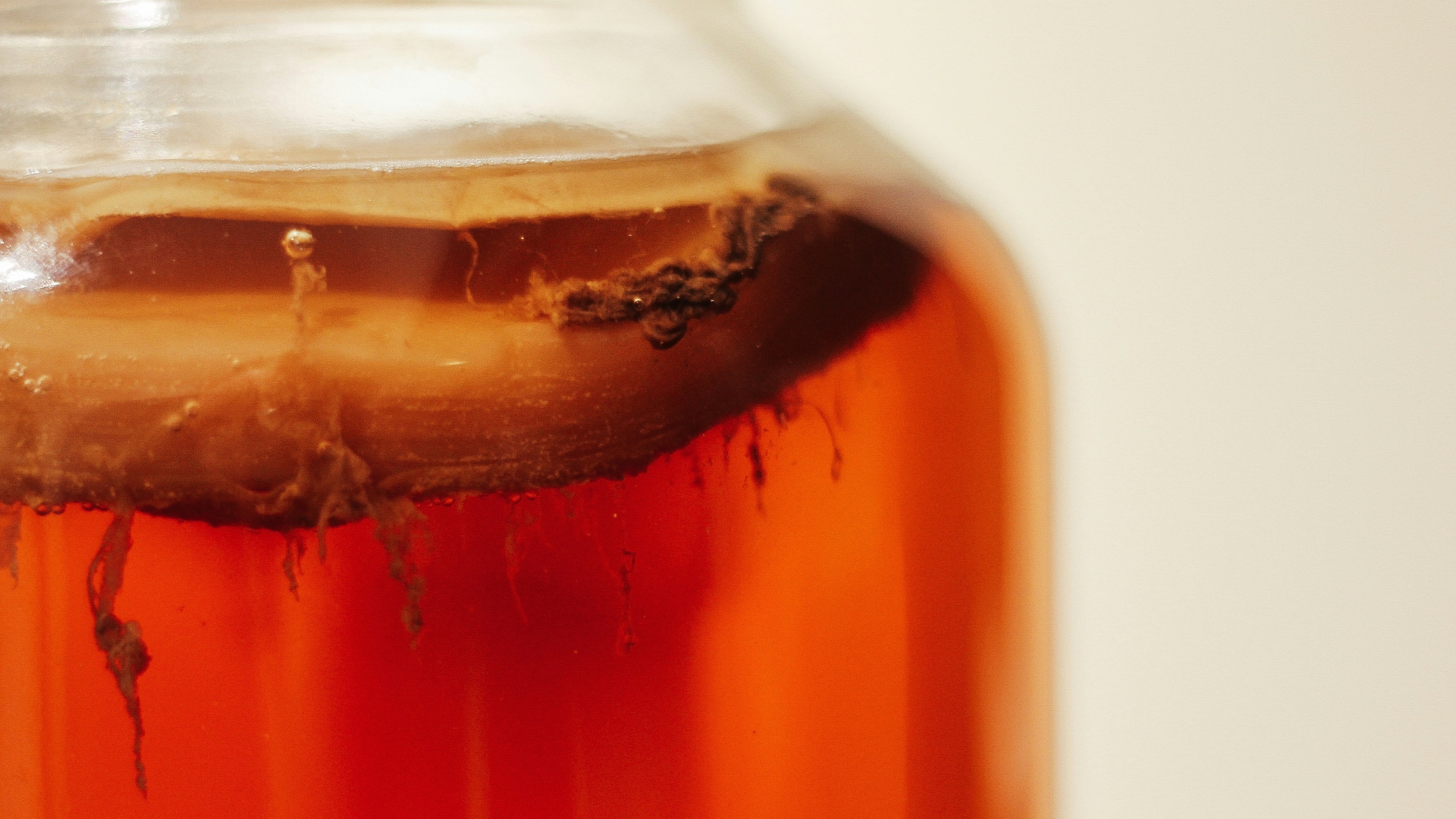
A long-established beverage called kombucha is currently trending. It is a drink made from strong, sweetened black or green tea that is fermented by yeast and acetic acid bacteria. Kombucha is also known for the so-called “tea fungus” or SCOBY (symbiotic culture of bacteria and yeast), which is formed by bacteria during fermentation and used as a starter culture in fresh, sweetened tea. According to legal regulations for non-alcoholic beverages, the alcohol content of kombucha drinks may not exceed two grams of alcohol per liter.
During the extraction of the tea infusion, mainly bitter and astringent polyphenols—known for their antioxidant properties—are extracted. The extract also contains pigments such as theaflavin, which give black tea its color. Caffeine is another component of tea that is bitter but not astringent.
Visually, the color intensity of the liquid decreases and the hue changes to a light yellow. This is the result of a change in the structure of phenolic pigments. The drop in pH is likely responsible for this. The cloudiness of the liquid changes due to the proliferation of microorganisms (MO) and the formation of macromolecules such as proteins.
The aroma of kombucha is characterized by esters (mainly ethyl acetate), higher alcohols such as isobutanol, and fatty acids (in this case, valeric acid or caprylic acid), which play a key role in the fruity flavor and citrus scent. Depending on the duration of kombucha fermentation, a vinegary note may become prominent.
Fermentation fundamentally alters the flavor. Individual perception depends heavily on the balance between sweetness and acidity. Equally important are the types of sugars and the organic acids. In the early stages of fermentation, the beverage is perceived as sweet; as fermentation progresses, it is perceived as sour and unpleasant.
For example, the release of gallic acid from larger molecules is an indication of a decrease in the molecular weight (or size) of the polyphenols as they are metabolized into antioxidants.
Water hardness—particularly calcium ions—is an important factor in the extraction of the tea’s constituents.
The spontaneous oxidation of polyphenols rapidly consumes the oxygen present in the liquid. The growth of microorganisms and their consumption of oxygen protect the antioxidants during the remainder of the process. The liquid surface is therefore the only area exposed to oxygen. As the surface area increases, so does the oxygen supply, which is the limiting factor in the oxidative metabolism of acetic acid bacteria.
Since kombucha is a fermented product, consumers expect it to contain live microorganisms that exert a probiotic effect when consumed. For this reason, pasteurization is not performed. Consequently, a cold chain is required to reduce the activity of the microorganisms. However, the ongoing low rate of fermentation can lead to the formation of ethanol and gaseous carbon dioxide, as the oxidative metabolism of acetic acid bacteria is inhibited in the presence of oxygen in the bottle.
The probiotic kimchi serves as a specific example of the improper production of a fermented food. It is important to emphasize here that sufficient acid formation, with a pH below 4.5, is extremely important. Once bottled, it is essential to ensure cool storage. If the pH is too high, the bacterium Burkholderia gladioli cocovenenans can produce the extremely toxic bongkrek acid, which can be fatal to an adult at a dose as low as one milligram. Devilishly: Bongkreks acid is heat-stable, tasteless, and odorless. Burkholderia thrives particularly well in moist, low-acid environments at temperatures between 22 and 37 °C.
Consequently, all fermented beverages require sophisticated sterilization technology with precise parameter limits and real-time monitoring. To achieve this, all parameters must be controlled and maintained within the optimal range for the microorganisms. These conditions include temperature, pH, nutrient content, uniform mixing, and oxygen concentration in the nutrient solution. All in all, this is a challenging task, which is addressed in an article on the specifics of biotechnological sterilization technology.
Sources
Interview with Prof. Dr. habil. Dr.-Ing. Iryna Smetanska; Weihenstephan-Triesdorf University of Applied Sciences
Thiery Tran: Production and Quality Control of Kombucha
Thomas Birus: Fundamentals of Biotechnology
Machine translated

Lifestyle & Health
A post by Susanne Blüml
Read more

Lifestyle & Health
A post by Thomas Birus
Read more
Lifestyle & Health
A post by Lucia Baier
Read more

Lifestyle & Health
A post by Lucia Baier
Read more